
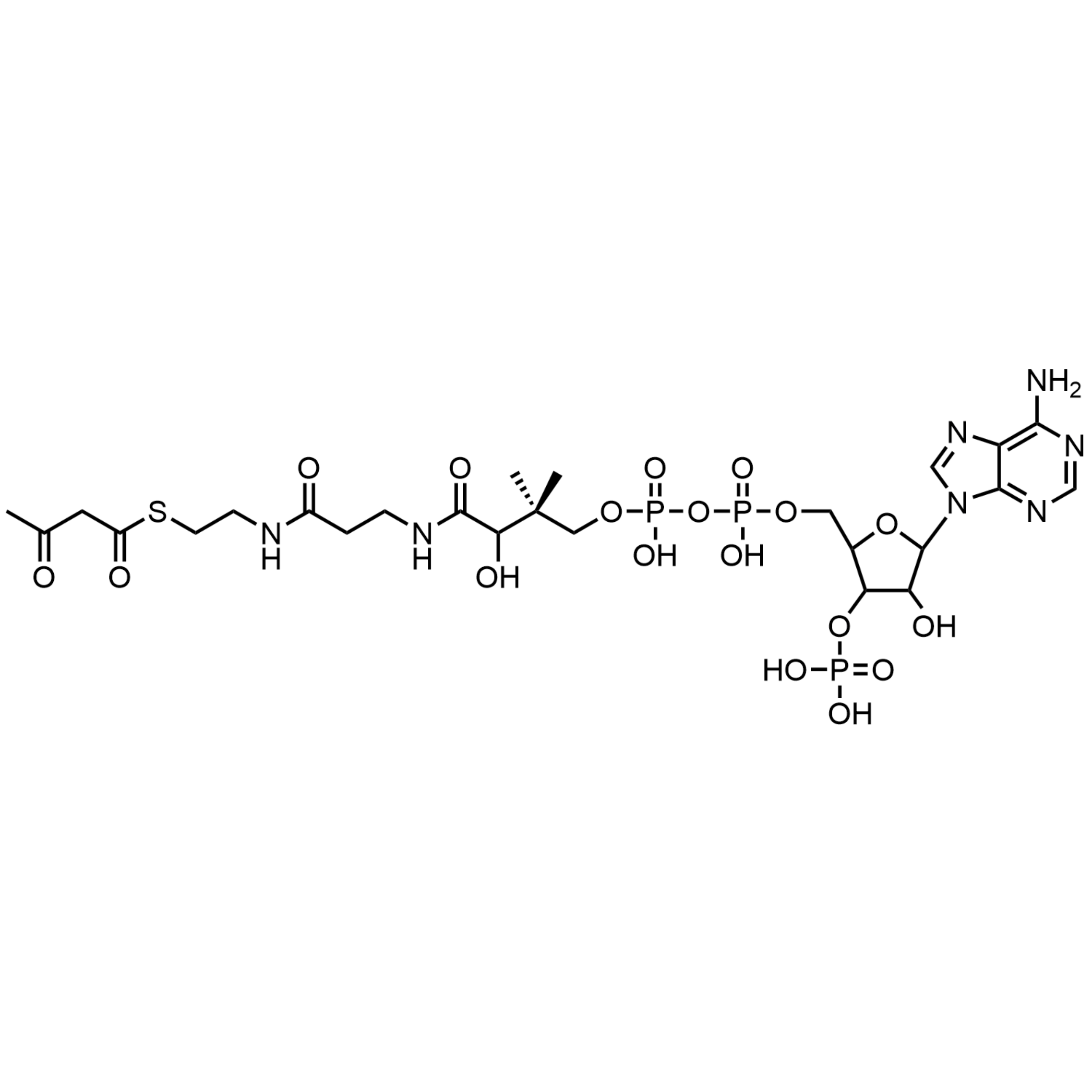
Acetoacetyl Coenzyme A, Free acid
CAS No.: 1420-36-6
Synonym(s): Acetoacetyl Coenzyme A, Acetoacetyl-CoA, Acetoacetylcoenzyme AAvailability: 6-8 weeks
Acetoacetyl-CoA is a central cytosolic metabolic intermediate formed from acetoacetate via acetoacetyl-CoA synthetase (AACS) or from acetyl-CoA via acetoacetyl-CoA thiolase.¹ ² ³ In mammals, AACS activates acetoacetate to support de novo biosynthesis of cholesterol and fatty acids, with expression regulated by SREBP-2.¹ ³ This pathway is essential in neuronal development, where it supports neurite outgrowth, dendritic differentiation, and expression of synaptic markers such as synaptopodin.¹ It is also important in adipogenesis, where AACS is induced by PPARγ and C/EBPα to enable lipid accumulation and adipocyte maturation.³
Applications
Acetoacetyl-CoA is a key precursor in microbial biotechnology for the production of polyhydroxyalkanoates (PHAs), especially poly(3-hydroxybutyrate) [P(3HB)]. In organisms such as Ralstonia eutropha, it is reduced by NADPH-dependent acetoacetyl-CoA reductase (PhaB) to (R)-3-hydroxybutyryl-CoA, which is then polymerized into biodegradable plastics. Structural and kinetic studies of PhaB guide enzyme engineering efforts to improve catalytic efficiency and increase polymer yield in industrial production systems.²
Other available forms


